Golf Simulator Net vs Impact Screen: Which Should You Buy?
Evidence label: Research-led. This guide is based on product-category research and practical setup considerations. Tomorrows Golfer has not hands-on tested every net or impact screen mentioned here.
If you are building a home golf setup, it is tempting to start with the launch monitor, projector or simulator software. In practice, the more important early decision is often what will safely stop the ball.
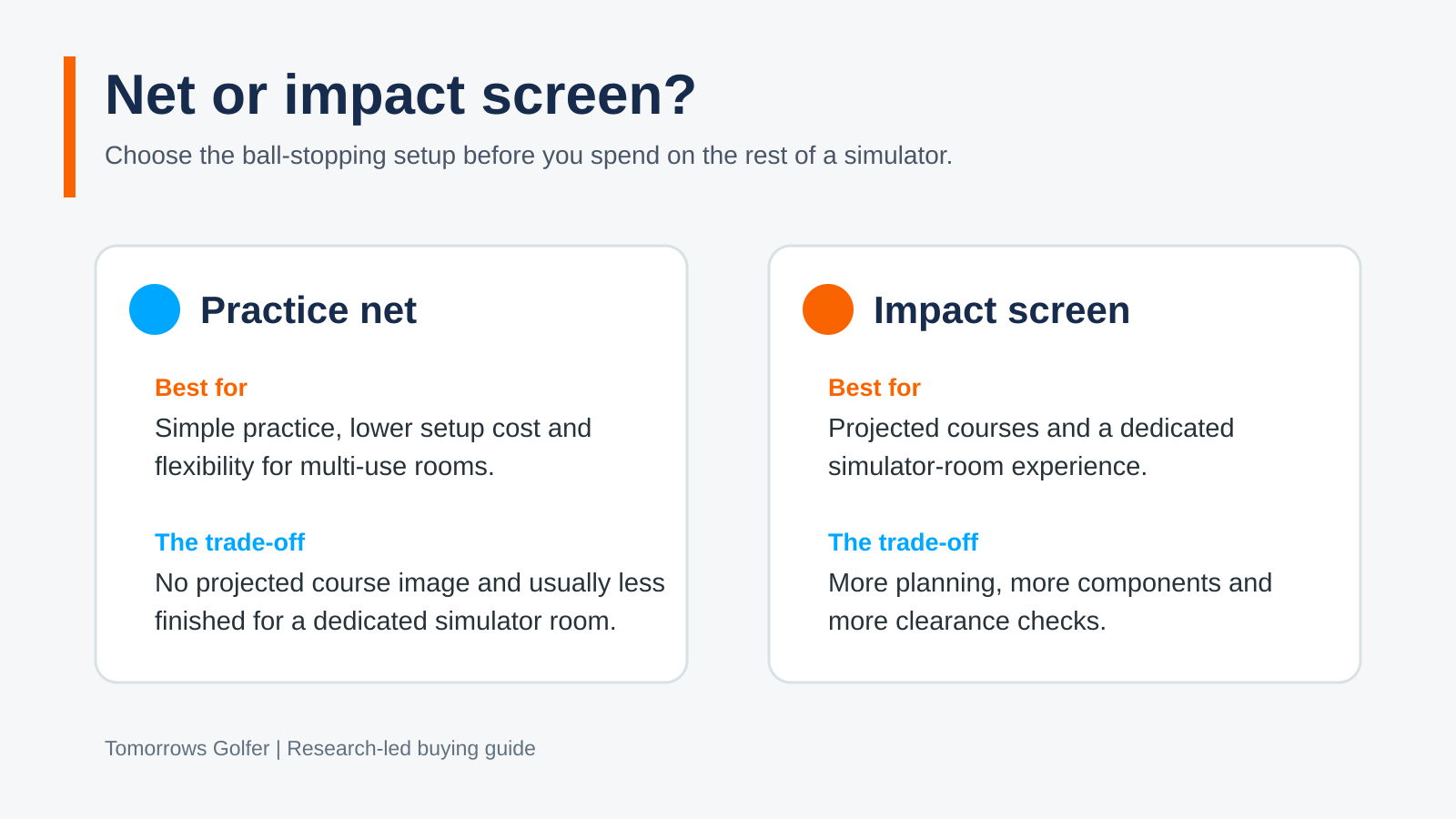
A practice net and an impact screen can both make sense, but they serve slightly different jobs. A net is usually the simpler route to hitting balls and collecting data. An impact screen is the foundation for a more immersive simulator room. Buying the wrong one first can leave you paying twice when the setup grows.
The short answer
- Choose a net if you want straightforward home practice, a portable setup, or a way to use a launch monitor without turning the room into a dedicated simulator.
- Choose an impact screen if you want projected courses, a more finished simulator experience and a space that can stay set up.
- Do not choose on price alone. The screen or net affects safety, noise, room layout, projector choice and how likely you are to keep using the setup.
What a golf practice net does well
A net is the practical answer for golfers who mainly want to hit balls, work on a swing change or collect launch-monitor data. It normally needs fewer components than a screen-based room, and many designs can be packed away after a session.
That makes a net a good fit for a garage used for more than golf, a garden session in suitable conditions, or a spare room where a projector would be overkill. It is also the sensible starting point when you are not yet sure whether you will practise often enough to justify a more permanent build.
The trade-off is the experience. You can see numbers on a phone, tablet or monitor, but you are not striking the ball into a projected course image. For plenty of golfers, that is not a problem. If your goal is better practice rather than virtual rounds, a clean net-and-launch-monitor setup can be the better use of money.
Before buying, check the manufacturer’s stated use, the net’s footprint and whether your hitting area allows the club and ball to stay clear of walls, lights and other people. Products such as the Spornia SPG-7 practice net show the category well, but the right choice still depends on your available space and the balls you plan to hit.
What an impact screen adds
An impact screen is designed to take the shot and provide the image surface for a projector. It is the right direction when the golf experience itself matters as much as the data. You can play a virtual course, see ball flight in front of you and build a room that feels closer to a commercial simulator bay.
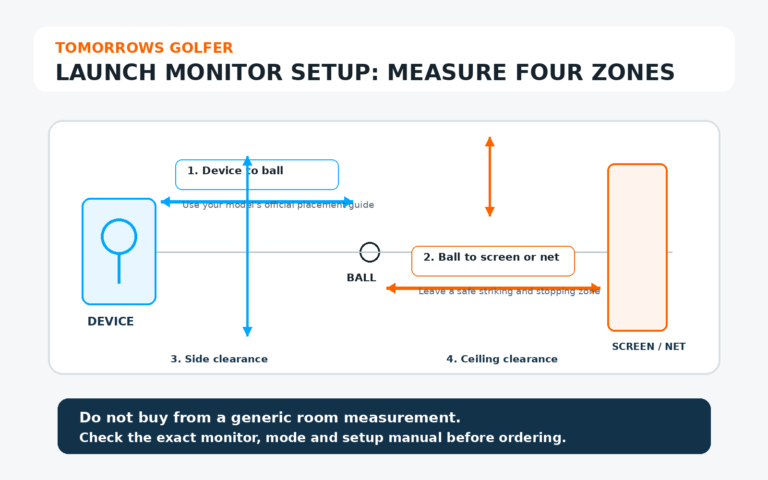
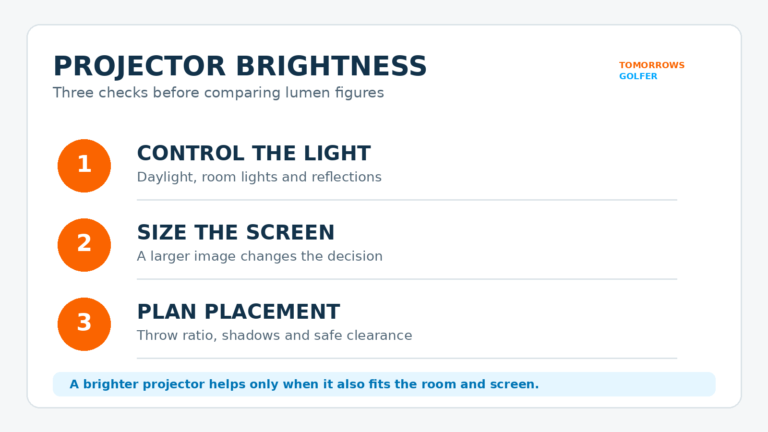
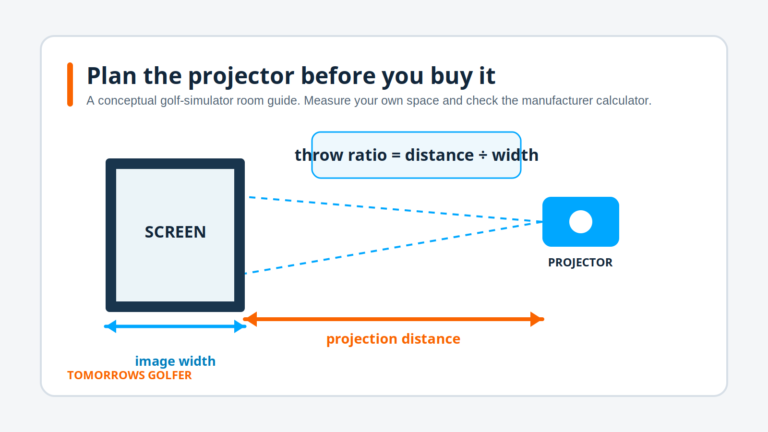
That extra immersion brings extra decisions. You need to consider screen width and height, the enclosure or framing, projector position, possible bounce-back, cable routes and whether the room can safely handle a full swing. The screen is only one part of a system.
It also creates a more permanent expectation. A screen setup can look excellent in a dedicated garden room or garage, but it is less appealing if you need to put everything away before parking the car. Read our guide to golf simulator room size before treating a screen as a simple swap for a net.
The decision most buyers actually need to make
Buy a net first if you want practice, not theatre
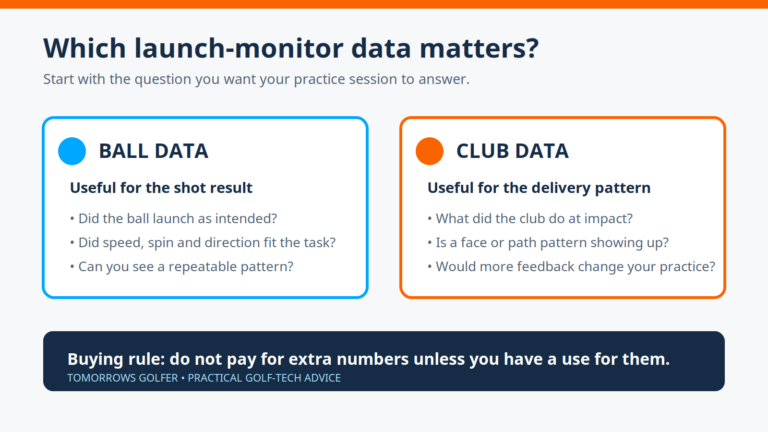
A net is usually the right first purchase when your main question is: can I make useful swings at home? Pair it with a mat you can stand on comfortably, enough ball-to-net distance for the product’s guidance, and a device that gives you the data you will actually use. You can still build a very effective practice routine without a projector.
This route also leaves budget for the parts that can improve practice more directly, such as a better mat, more consistent balls or a launch monitor that suits your space. Our guide to buying a launch monitor versus paying for TrackMan sessions can help with that wider decision.
Choose an impact screen when the room is ready for it
An impact screen makes more sense once you know the space is safe, the setup will stay in place and you genuinely want to play simulated golf at home. It is a room decision before it is a screen decision.
Do not assume a projector is compulsory at day one. A screen can be part of a phased build, but it is worth understanding the display choices first. See whether you need a projector for a home golf simulator for the practical differences between a projector, a TV or monitor, and a no-display practice setup.
Safety and noise are not afterthoughts
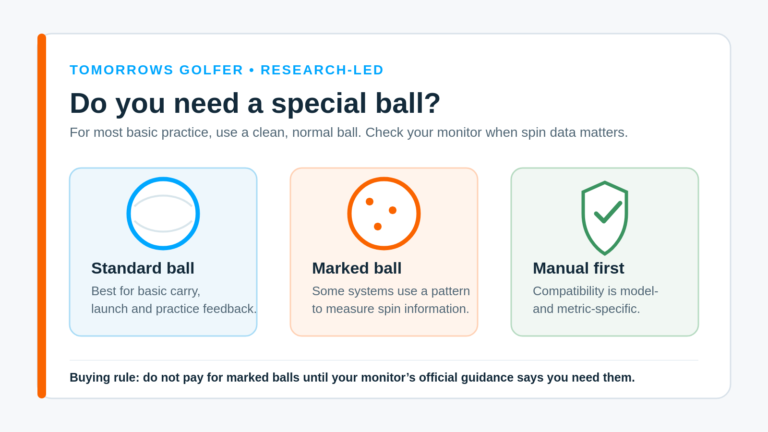
Neither option removes the need to plan the room. A net can still allow a missed shot, and a screen setup can still create rebound, noise or clearance problems if it is poorly installed. Follow the specific manufacturer guidance for the product you buy, use the type of ball it is intended for, and think about who or what is behind and beside the hitting area.
Ceiling height matters, but so do your own swing shape and club length. Make slow practice swings in the intended spot before you commit. If there is any doubt about clearance, choose a safer location or a more compact plan rather than trying to make the room work on paper.
Budget for the whole setup
A net can look cheap until you add a mat, side protection, a tablet stand and a launch monitor. A screen can look like the expensive option, yet the real cost rises with enclosure, projector, computer, software and room preparation.
That is why it is useful to price the system in stages. Start with a safe hitting area, then decide how much data and visual immersion you need. Our UK golf simulator costs guide breaks down the categories that often catch buyers out.
Who should choose each option?
A net is for you if:
- You want to practise at home without committing a whole room to golf.
- Strike, swing work or launch-monitor feedback matter more to you than projected courses.
- A setup that can be stored away is important.
- It makes sense to learn whether home practice fits your routine before spending further.
An impact screen is for you if:
- You have measured a space that can safely accommodate your swing and the screen system.
- You want to play simulated rounds as well as practise.
- You are prepared to plan the display, enclosure, noise and cabling around it.
- You want a setup that feels deliberate rather than temporary.
Tomorrows Golfer verdict
For most everyday golfers, a net is the lower-risk first move. It lets you find out whether regular home practice is genuinely useful without forcing you into a full simulator-room budget.
An impact screen is the better choice when you have already solved the room, safety and permanence questions. It can transform the experience, but it should be the result of a well-planned build rather than the first item in the basket.
If you are unsure, buy the setup that makes it easiest to hit balls safely this month. You can add immersion later. It is much harder to make an expensive screen setup fit a room that was never right for it.