GPS vs Laser Rangefinder for Golf: Which Should You Buy?
Research-led guide. This article is based on current product-category information and practical course-use considerations. It is not a hands-on test of every GPS device or laser rangefinder mentioned.
Choosing between a golf GPS device and a laser rangefinder is less about which is more accurate in theory and more about which information helps you make a decision quickly on the course. A GPS watch or app is usually better for seeing the whole hole and planning around hazards. A laser is better when you want the distance to a precise target, particularly the flag.
For most everyday golfers, a GPS watch or phone app is the easier starting point. Add a laser rangefinder if you regularly want pin-specific numbers and are happy to take it out for approach shots.
Quick verdict: GPS vs laser rangefinder
Choose a GPS watch or handheld if you want the whole-hole view
Best for: quick front, middle and back yardages, plus hazards and lay-up information.
The trade-off: it cannot normally give the exact distance to the flag on that day.
Choose a laser rangefinder if you want a precise number to a visible target
Best for: the pin, bunker lip, tree or another clear landmark.
The trade-off: it is slower when you need a full-hole plan or cannot see the target clearly.
Choose a phone app if you want the lowest-cost GPS route
Best for: occasional GPS yardages or trying GPS before buying a dedicated device.
The trade-off: battery life, wet weather and the distraction of using your phone.
Choose GPS plus a laser if you value both context and pin precision
Best for: golfers who use GPS to manage the hole, then want a pin-specific number on approach shots.
The trade-off: more cost and another device to carry or charge.
What a GPS device does better
GPS is strongest before you have selected a club. It can show front, middle and back distances to the green, then add distances to hazards, doglegs and lay-up zones. That makes it useful from the tee, on long par 4s and par 5s, and whenever you need to decide where not to miss.
A golf GPS watch is particularly convenient because the information is already on your wrist. You can look at the hole while walking, choose a sensible target and keep moving. For golfers who do not want another item to take out of a bag, that convenience often matters more than having a pin-specific number.
GPS is also the better tool when the flag is hidden, the green is blind, or you are deciding how far to lay up short of trouble. A laser can only measure a target you can identify and see. GPS gives you the broader map of the hole.
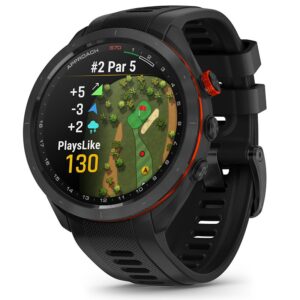
GPS is likely the right choice if you:
- want quick yardages without stopping over the ball
- need help with hazards, lay-ups and green depth
- prefer simple course management to flag hunting
- play in varied weather and want something easy to use with gloves on
- want one device that can cover every shot, not only visible targets
What a laser rangefinder does better
A laser rangefinder earns its place when you want the distance to a specific visible point. The obvious example is the flag, but it can also help with the front of a bunker, a tree that marks a good line, or a landing area you can clearly pick out.
That matters most on approach shots. If the pin is tucked at the front or back of a large green, front-middle-back GPS numbers may leave a meaningful gap between the number you have and the shot you want to play. A laser can reduce that uncertainty, provided you can lock onto the right target.
Lasers are not automatically the better choice for every golfer. They take a few seconds to use, can be awkward in rain or poor light, and do not replace the course-management information a GPS device provides. They are best viewed as a precision tool, not a complete course guide.
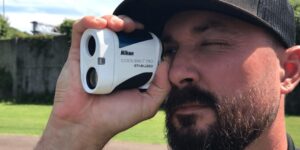
A laser is likely the right choice if you:
- often want an exact number to a visible flag or target
- play courses with large greens and regularly face front or back pins
- are comfortable taking a few seconds to get a reading
- prefer a dedicated device rather than a watch or app
- already understand the hole and mainly need a precise approach number
GPS watch, handheld, phone app or laser?
GPS watch
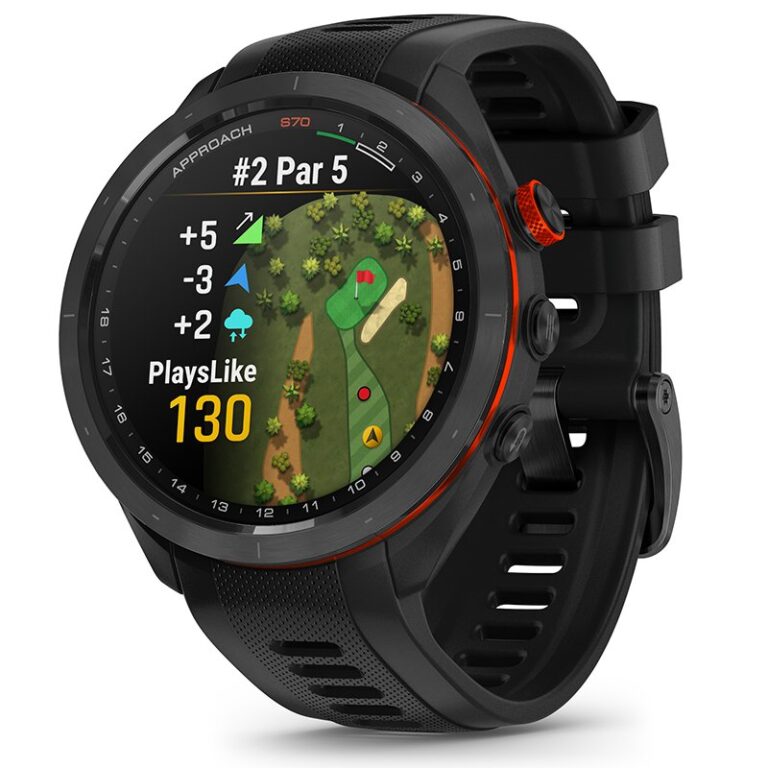
Best for golfers who want a simple, always-available course-management tool. It is the most convenient option for front-middle-back distances and hazard information, although battery life, screen size and comfort vary between models.
Handheld GPS
Best for golfers who want a larger screen but do not want to use a phone. It can make the hole layout easier to read, but it is another device to carry and check.
Phone app
Best for occasional use or golfers who want to test GPS before buying a dedicated device. The trade-off is relying on phone battery, data/course downloads and taking your phone out during a round.
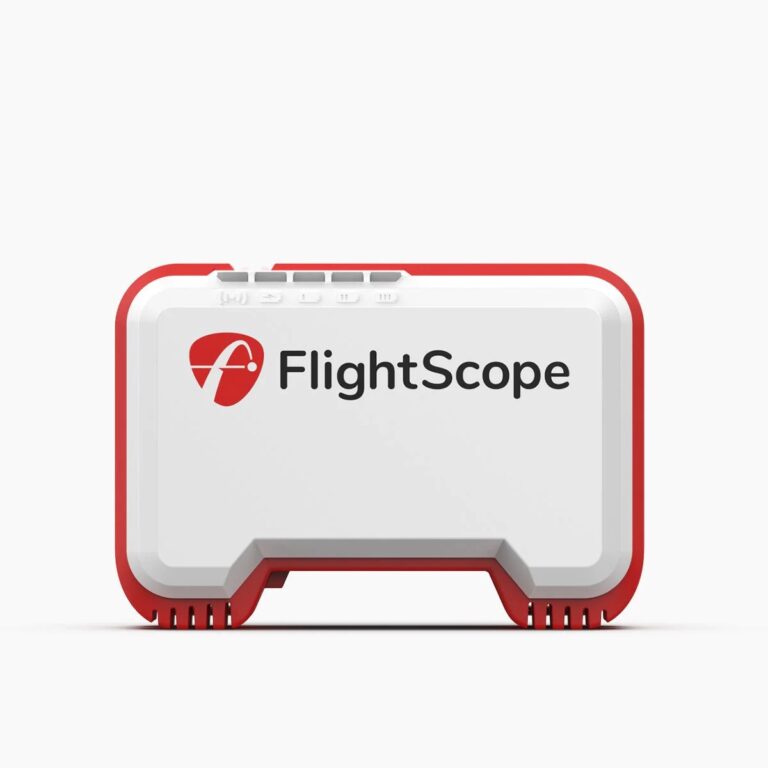
Laser rangefinder
Best for precise visible targets, especially pins. It is less useful for blind shots, course strategy and hazard planning.
Which one helps most on different shots?
Tee shots
GPS usually wins. From the tee, the important questions are often about hazard carry, fairway width, doglegs and where to leave your next shot. A number to the flag rarely answers those questions.
Approach shots
This is where the laser has its strongest case. If you have a clear view of the flag and the pin position changes your club choice, a laser can be genuinely useful. GPS remains useful for confirming green depth and the safer part of the green.
Lay-ups
GPS is normally more practical. You need to know how far it is to trouble and how much distance you want left for the next shot. Mapping information is often more useful than a single point-to-point reading.
Short game
Neither device replaces judgement, feel or a sensible assessment of lie and wind. A laser can help on longer pitches to a visible flag, but GPS distances to the green may be enough for many golfers.
Can you use GPS and lasers in competitions?
Distance-measuring devices can be permitted under the Rules of Golf, but features and local competition conditions matter. If your device has slope or elevation functions, make sure you understand whether they must be disabled. Check the competition’s local rules before you play. The R&A’s Rule 4 guidance is the right starting point for the current equipment rules.
Do you need both?
Not necessarily. A GPS watch is enough for many golfers because it delivers the distances that matter most, quickly and with useful context. A laser becomes worthwhile when pin position regularly changes your decision, or when you enjoy having a more precise number to a visible target.
If budget only allows one device, choose the one that solves your most common problem. Choose GPS if you need better course management. Choose a laser if you already manage the hole well but want more confidence on approach distance.
Related Tomorrows Golfer guides
Final verdict
GPS is the better all-round choice for most golfers because it helps you plan the hole, manage hazards and get a useful number without slowing down. A laser rangefinder is the better specialist tool for golfers who want exact distances to visible flags and targets.
The sensible answer is not that one device is universally better. It is that GPS gives you context, while a laser gives you precision. Pick the one that improves the decisions you actually struggle with during a round.