Golf Simulator Room Size: How Much Space Do You Need?
Research-led guide. This article explains the planning questions that matter before building a home simulator. It is not a hands-on test of every launch monitor, screen or enclosure.
A golf simulator can fit in more homes than many golfers assume, but a room that looks large enough is not automatically safe enough to swing in. The right question is not simply, “What are the minimum dimensions?” It is whether you can make a full swing with your chosen club, use the launch monitor properly and leave enough room for the screen, ball flight and any other golfer in the space.
Start with your own movement, not a generic measurement online. Then check the official requirements for the exact launch monitor, screen and projector you are considering.
Quick answer
A usable simulator room needs four things: safe swing clearance, enough ball-to-screen depth, the correct space for the launch monitor and screen, and a plan for left- and right-handed players. Ceiling height is often the first limiter, but width and depth decide whether the room is comfortable rather than merely possible.
Measure height first
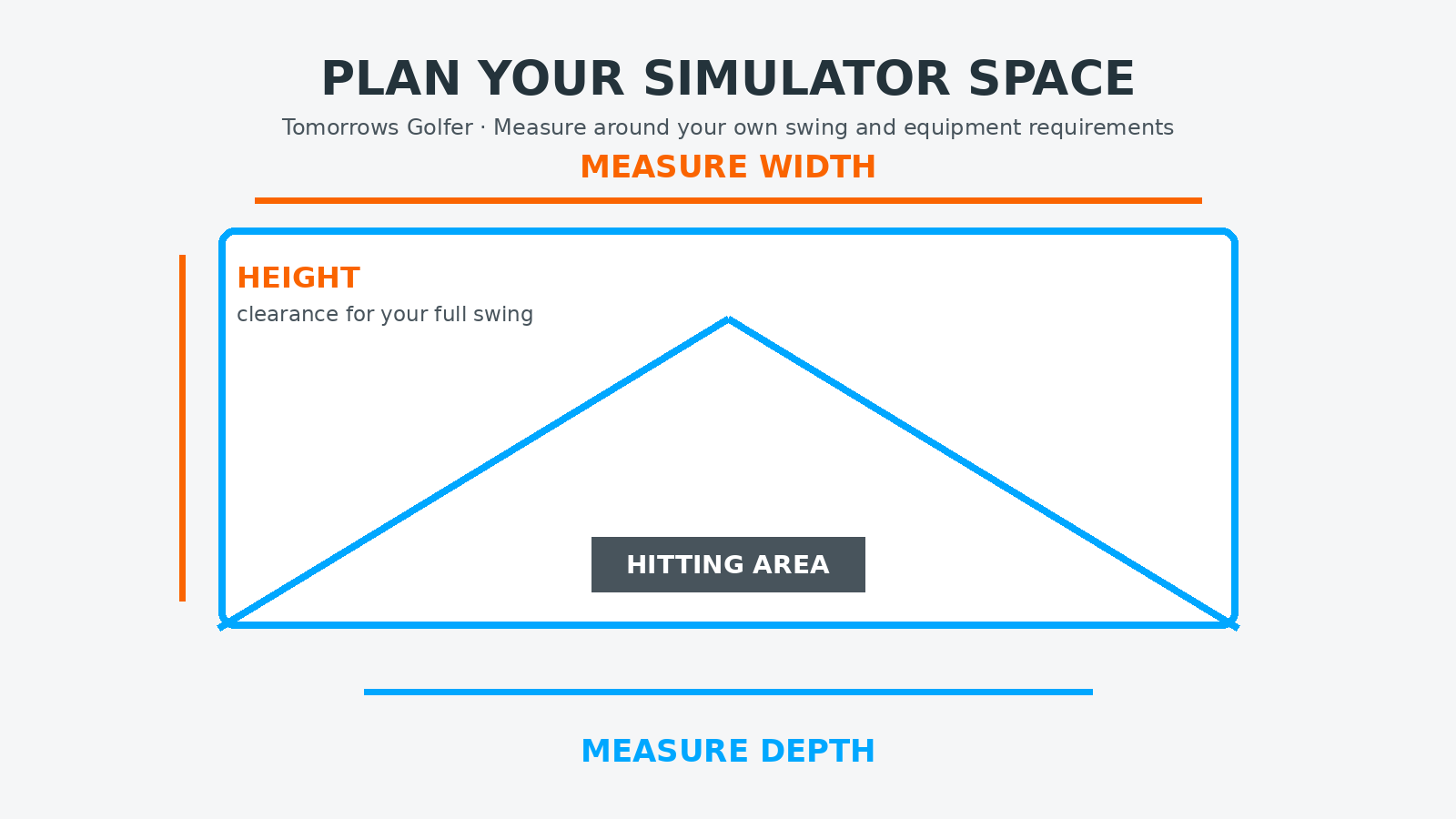
Height is the non-negotiable check. A golfer can make a restricted swing in a low room without immediately noticing the problem, then unconsciously change their motion to avoid the ceiling. That is not a useful practice environment.
Take the club you are most likely to swing at full speed, usually a driver, and make several slow rehearsal swings in the proposed space. Leave a sensible margin above the highest point of the clubhead. Do not base the decision only on your standing height, a manufacturer’s broad rule of thumb or a single cautious practice swing.
If the ceiling is borderline, there are still alternatives. You may use shorter clubs, make a specific indoor-practice setup, or choose a different room. What you should not do is buy the whole system first and hope the ceiling works later.
Width: plan for the golfer, not just the mat
Width affects how naturally you can stand, swing and set up the ball. It matters even more if more than one person will use the simulator. A room that works for a right-handed golfer can become awkward for a left-handed guest if the hitting position needs to move or the launch monitor has a fixed preferred position.
Mark the proposed hitting line on the floor with tape. Then mark where the mat, screen/enclosure, launch monitor and projector would sit. Rehearse a swing from the actual hitting position. This simple check often exposes problems that a room plan misses, such as a side wall that is too close on the follow-through.
Depth: allow for the whole system
Depth is not only the distance from you to the screen. Depending on the equipment, the room may need space behind the ball for a radar-based unit, space in front of the ball for a camera-based unit, room between ball and impact screen, plus a safe buffer behind the screen itself.
That is why two simulators can have very different room requirements. Do not choose a launch monitor from a best-of list and assume it will suit the space. Read the manufacturer’s setup guidance for that exact model before you commit.
Radar or camera changes the layout
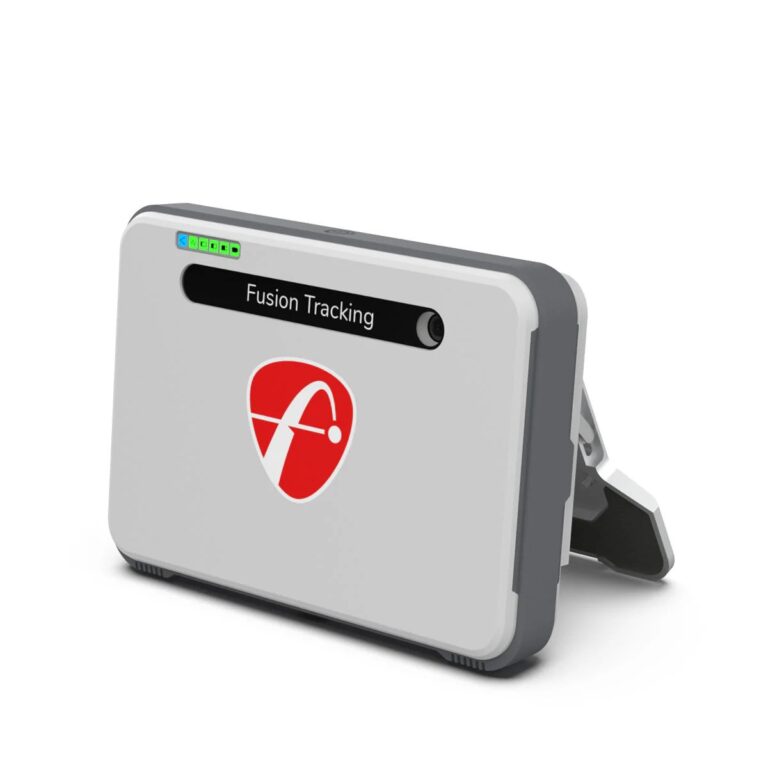
Launch monitor technology matters to room planning. Radar-based systems commonly need a clear measurement window behind the ball. Camera-based systems are often positioned beside or in front of the hitting area, but still have their own placement and lighting requirements.
Neither technology is automatically better. The practical question is which system works with your room and the way you want to practise. Our radar vs camera guide explains the trade-off in more detail.
Garage, spare room or garden room?
Garage
A garage can be a strong option because it is separate from the main living area and often has useful depth. Check ceiling beams, garage-door tracks, insulation, noise and whether the floor is level enough for a mat and screen.
Spare room
A spare room can be convenient, but it is where width and ceiling height most often cause compromise. It may still suit putting, chipping, swing video or compact practice, even if it is not the right place for full-speed driver shots.
Garden room
A garden room can be planned around the simulator from day one. That makes it the easiest route to a comfortable setup, but it also makes it important to budget for power, heating, ventilation, sound and a genuinely suitable building size rather than just the simulator kit.
Screen, projector and noise
Do not treat the screen as a decoration added at the end. It affects where the ball can be hit, how much buffer you need and whether your projector can produce a usable image without shadows. If a projector is part of the plan, map its throw distance and mounting position before buying.
Noise also changes the real-world fit. An impact screen, club strike and launch-monitor setup can be loud enough to matter in an attached garage, upstairs room or close neighbour situation. Soft wall treatment and a quality impact surface may help, but they do not remove the need to think about when you will use the room.
A practical planning checklist
- Measure usable height, width and depth, excluding beams, lights and doors.
- Make full rehearsal swings from the real hitting position.
- Check whether both right- and left-handed players need to use it.
- Read the exact launch monitor’s placement requirements.
- Plan ball-to-screen distance, screen buffer and projector position.
- Consider power, Wi-Fi, heating, ventilation and noise before buying hardware.
Who this is for
This guide is for golfers considering a first home simulator in a garage, spare room or garden building. It is especially useful before choosing between launch-monitor types or spending money on an enclosure.
Who should skip it
If you already have a professionally designed studio, manufacturer-specific installation guidance will be more useful than a general planning guide.
Final verdict
The best simulator room is not the largest room in the house. It is the room where you can swing freely, place the equipment correctly and use the setup often enough to justify it. Measure your own swing first, then choose the technology and screen around the space you genuinely have.