Should You Buy a Launch Monitor or Pay for TrackMan Sessions?
Research-led guide. This is a practical ownership decision, not a test of every launch monitor or a judgement on a particular driving range.
Buying a launch monitor can make sense, but it is not automatically better value than booking sessions on a range or studio that already has professional-grade ball-tracking technology. The better option depends on how often you practise, whether you understand the information you see and whether access to coaching or a larger practice space changes the quality of the session.
The key is to compare the routine you will actually keep, not the ideal routine you imagine on the day you buy the device.
Quick verdict
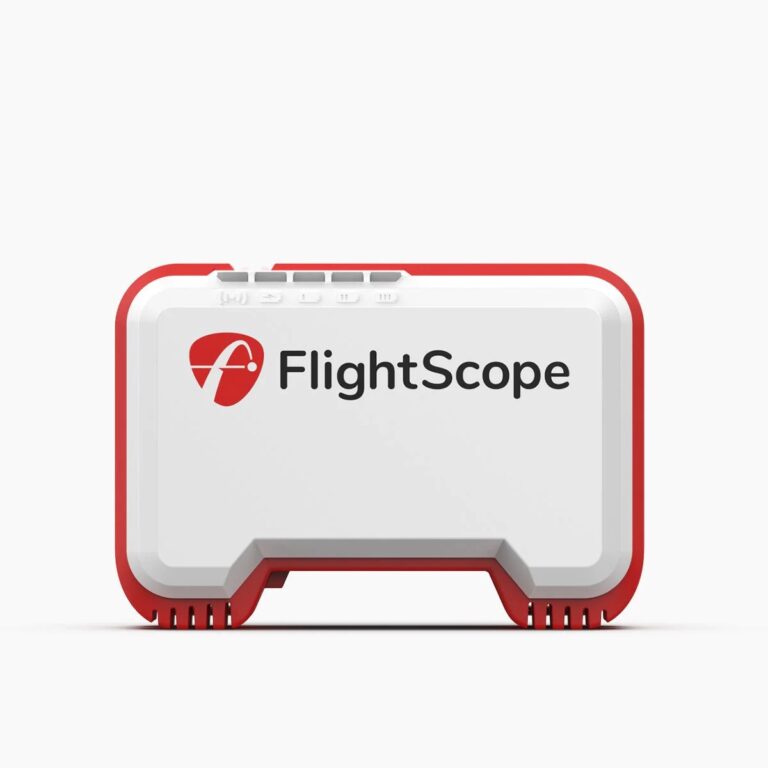
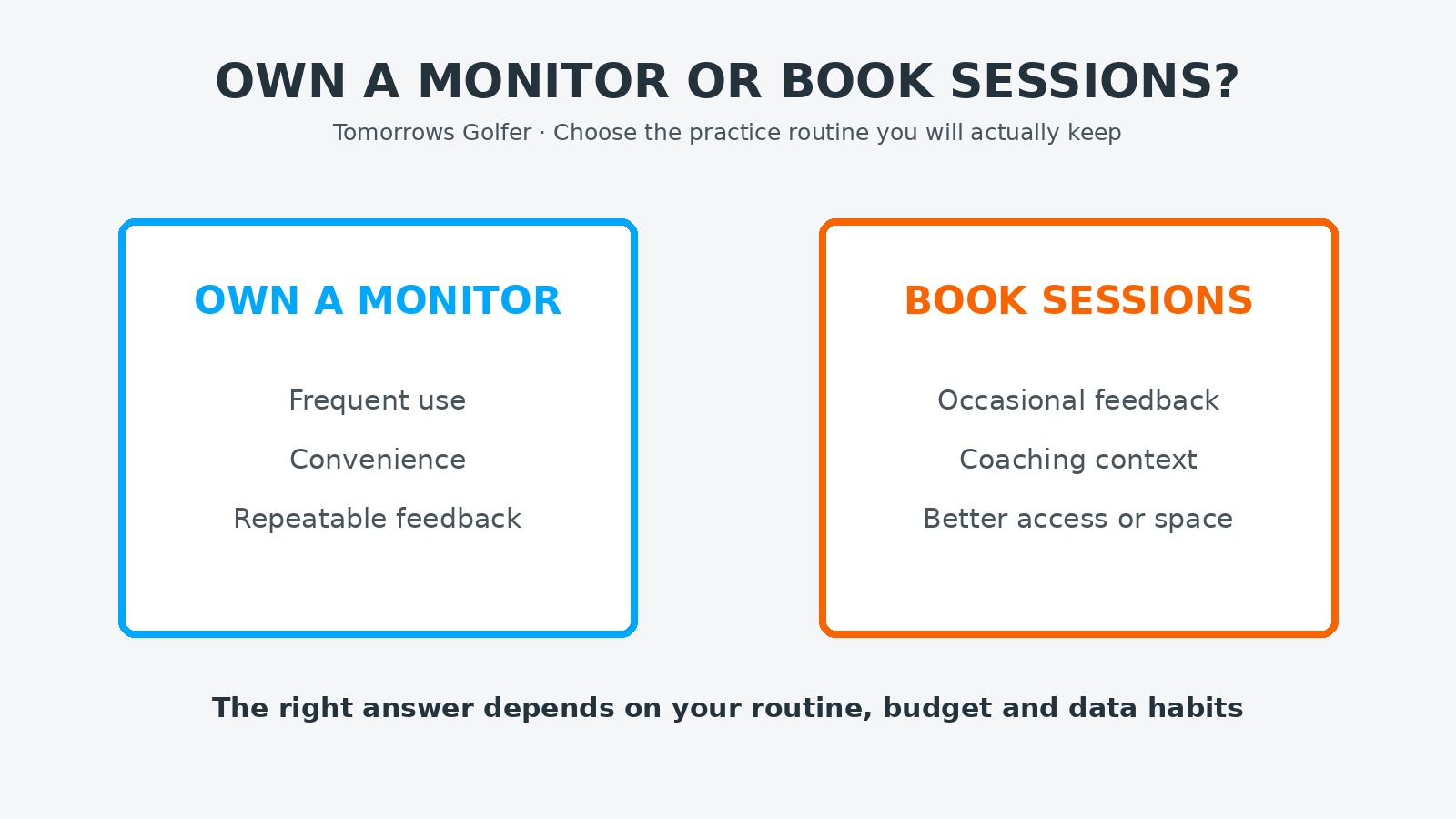
Buy a launch monitor when convenient access will help you practise more often and you have a clear use for the data. Pay for monitored sessions when you practise less frequently, benefit from coaching context or want to use technology that would be impractical to own at home.
When owning a launch monitor makes sense
Ownership is strongest when it removes friction. If you can use a monitor at home, in a garage or regularly at a nearby range, the value is not only the data. It is the ability to turn a 20-minute practice window into a useful session without booking, travelling or waiting for a bay.
A personal device can also help if you are trying to answer the same repeatable question over time. You might be checking carry distance gaps, comparing two shafts during a fitting process, or testing whether a practice change is producing a more reliable strike pattern. Repetition is where ownership becomes useful.
That does not mean more data is always better. A monitor you rarely set up, do not understand or only use to watch a collection of numbers is an expensive way to make range practice less focused.
When paid sessions make more sense
Paying for sessions can be the smarter route if you only want occasional feedback. A simulator studio, teaching professional or technology-equipped range may give you a better environment, more space and someone who can help translate the information into a sensible next step.
It is also a good choice if your home does not suit a monitor. Room size, ball flight, lighting, weather and the setup requirements of different technologies can all make ownership less convenient than it first appears.
For many golfers, a hybrid approach works best: book monitored sessions when you want a baseline or coaching input, then use ordinary range sessions to work on one simple task between visits.
Ask these five questions before you buy
1. How often will I genuinely use it?
Be honest about access. A compact device that is ready to use may be more valuable than a more advanced setup that requires a full room reset each time.
2. What question am I trying to answer?
“I want more data” is not enough. A better answer might be: “I want reliable carry distances for my irons,” or “I want to see whether my driver strike is becoming more consistent.”
3. Can I use it in my normal practice environment?
Check the manufacturer’s current setup requirements before purchase. Some systems are designed for a particular indoor or outdoor arrangement. Your garage, garden or range bay matters as much as the product specification.
4. Do I need a coach or fitter in the loop?
Data is useful, but it does not diagnose every problem on its own. If your main aim is a swing change, club fitting or a specific performance issue, occasional expert input may be more valuable than owning more numbers.
5. What will I give up to own it?
Budget is not only the device. Think about software, subscriptions where relevant, balls or markings required by some systems, net/screen space and whether the purchase replaces or simply adds to paid practice.
Ownership does not mean unlimited improvement
It is easy to mistake access for progress. The best monitor in the world cannot choose a practice goal for you. Before every session, decide what you are trying to improve and which one or two measures will tell you whether the session is moving in the right direction.
Our guide to golf swing analysis technology is useful if your main goal is to connect video, feel and data rather than chase a single number.
Who should buy a launch monitor?
- Golfers who practise regularly and can use it conveniently.
- Players who want repeatable distance or strike feedback.
- Home-simulator buyers who need the monitor as part of the setup.
- Golfers who can explain what they will use the data for before they buy.
Who should book sessions instead?
- Golfers who only want occasional feedback.
- Players who value fitting or coaching context.
- Anyone without a safe or practical place to use a monitor.
- Golfers who are still unsure which data would improve their practice.
Final verdict
Buy a launch monitor for convenience, repetition and a clear practice purpose. Book TrackMan or other monitored sessions when you need occasional higher-end feedback, professional context or access to a better setup than you can create at home.
If you are undecided, start by paying for a few focused sessions. You will quickly learn whether you want regular access to the data or simply need a better structure for practice.